
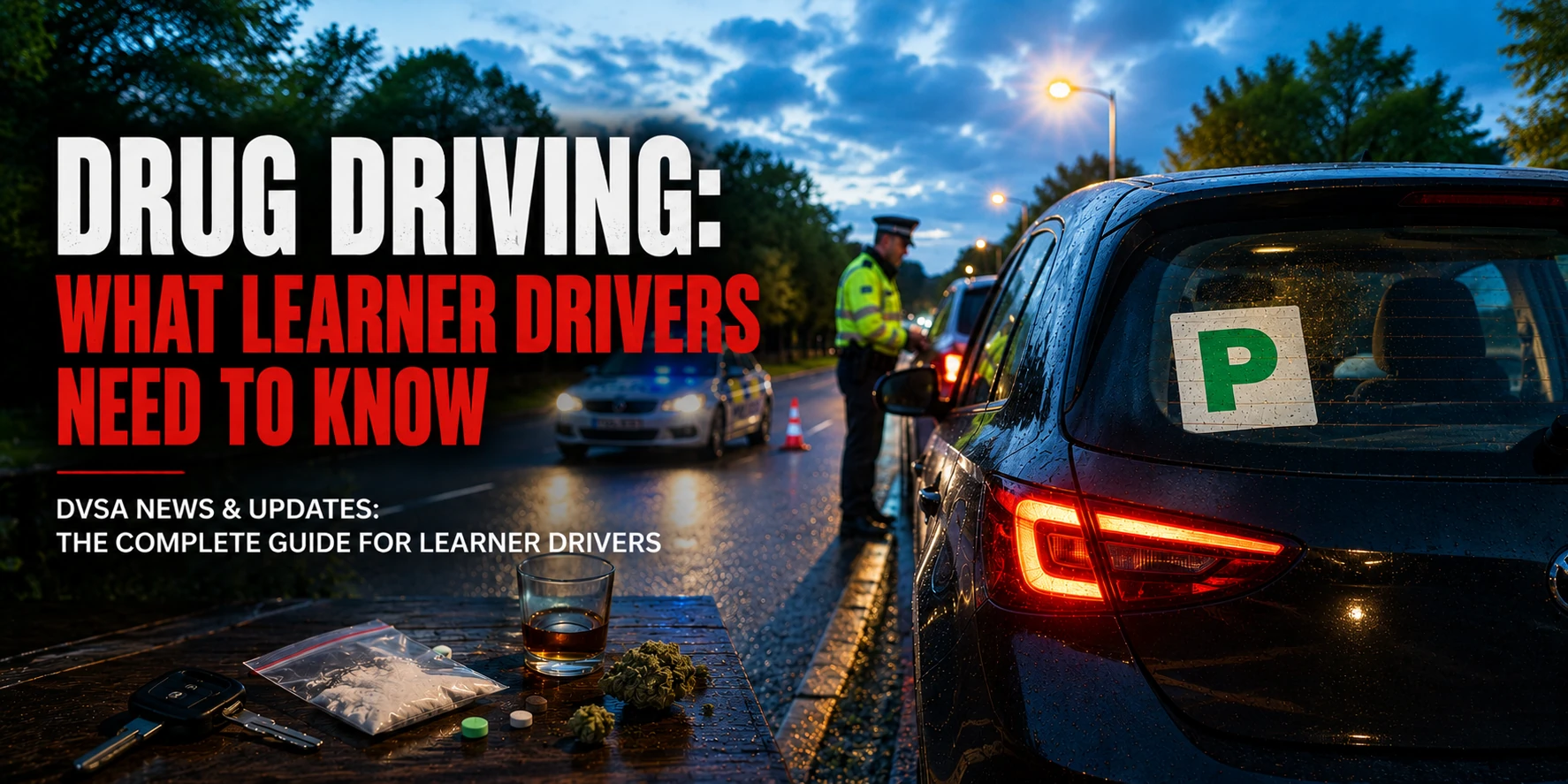
Drug Driving: What Learner Drivers Need To Know
Last updated: July 2026
Drug driving remains one of the most serious road safety issues in the UK, and the Driver and Vehicle Standards Agency (DVSA) is encouraging learner drivers and driving instructors to play their part in tackling the problem. Through its latest THINK! campaign, the DVSA is helping to raise awareness of the dangers of driving after taking drugs and encouraging open conversations about the potentially devastating consequences.
Although the campaign is aimed at all drivers, it is particularly relevant for learner drivers and newly qualified motorists who are still developing safe driving habits and making important decisions behind the wheel. Understanding how drugs can affect driving ability is an essential part of becoming a safe, responsible and confident driver.
What Is The New THINK! Campaign?
In June 2026, the THINK! road safety campaign launched a new initiative focusing on drug driving and the attitudes that can lead people to make dangerous decisions. Rather than simply highlighting the legal consequences, the campaign encourages drivers to think about how one poor decision can have life-changing consequences for themselves, their passengers and other road users.
The campaign aims to challenge common misconceptions about drug driving and encourages families, friends and driving instructors to start conversations about the risks. By increasing awareness and changing attitudes, the campaign hopes to reduce the number of collisions caused by drivers impaired by drugs.
One of the key messages is that drug driving affects your ability to drive safely, even if you believe you feel fine. Many drugs can reduce judgement, slow reaction times and affect concentration long before drivers realise they are impaired.
Why Is The THINK! Campaign Focusing On Young Drivers?
The latest THINK! campaign places a strong emphasis on young drivers because they are disproportionately affected by drug driving offences and collisions. According to Think! campaign statistics, 21,791 people were convicted of drug driving offences in England and Wales during 2025, with the number of convictions increasing steadily over the past decade.
The campaign also highlights that young men are particularly at risk. Around 90% of drivers impaired by drugs who were involved in collisions were male, and approximately 4 in 10 were aged between 17 and 29.
Research carried out as part of the campaign also found that many young drivers underestimate the risks. Around 41% of young men believed it was acceptable to drive after taking drugs if they "felt fine", while 51% said they knew someone who had driven after taking drugs. These findings demonstrate why education and open conversations about drug driving remain so important for learner drivers, newly qualified motorists and driving instructors.
Why Is Drug Driving Dangerous?
Driving requires constant concentration, quick reactions and good decision-making. Drugs can interfere with all of these essential driving skills.
Drug driving can cause:
- Slower reaction times
- Poor judgement when assessing hazards
- Reduced concentration
- Impaired coordination
- Difficulty maintaining lane position
- Increased risk-taking
- Reduced awareness of other road users
- Increased stopping distances
- A significantly higher risk of being involved in a collision
Even small amounts of certain drugs can affect your ability to drive safely. You may not notice the effects yourself, but your driving performance can still be seriously impaired.
What Counts As Drug Driving?
Many people assume drug driving only relates to illegal drugs, but this isn't the case.
Drug driving can involve:
- Cannabis
- Cocaine
- Ecstasy (MDMA)
- Ketamine
- Amphetamines
- Heroin
- Other illegal substances
- Prescription medicines that affect your ability to drive
- Some over-the-counter medicines that cause drowsiness or impair concentration
If you're taking prescription medication, always read the patient information leaflet and follow your doctor's or pharmacist's advice before driving. Some medicines carry warnings advising you not to drive until you know how they affect you.
You can find official guidance about medicines and driving on GOV.UK.
Understanding the rules of the road is an important part of becoming a safe driver. You may also find our Highway Code Guide useful.
Can You Be Arrested The Morning After?
One of the biggest myths surrounding drug driving is that you're safe to drive the following morning.
Unfortunately, this isn't always true.
Some drugs remain in your body for many hours, and in some cases several days, after they've been taken. Even if you no longer feel any effects, they may still impair your driving or be detected during a roadside drug test.
Feeling "normal" does not necessarily mean you're safe or legally allowed to drive. If you have taken drugs, the safest option is not to drive until you're certain they are no longer affecting you.
What Are The Penalties For Drug Driving?
Drug driving is a serious criminal offence with severe penalties.
If you're convicted of drug driving, you could face:
- A minimum 12-month driving ban
- An unlimited fine
- Up to six months in prison
- A criminal record
- Increased motor insurance premiums
- Difficulty finding employment, particularly if driving forms part of your job
- Long-term effects on future career opportunities
If your driving causes a serious collision, the penalties can be much more severe.
Why This Matters For Learner Drivers
Learning to drive isn't just about passing your practical driving test. It's about developing safe driving habits that will stay with you throughout your life.
Understanding the dangers of drug driving helps learner drivers:
- Make responsible decisions
- Recognise how impairment affects driving ability
- Build a positive road safety mindset
- Understand the legal consequences of dangerous driving
- Become safer and more responsible motorists
Developing these habits from the beginning of your driving journey makes you less likely to take unnecessary risks once you've passed your test.
How Driving Instructors Can Help
Driving instructors play an important role in promoting safe driving behaviours.
Alongside teaching vehicle control and road awareness, instructors can help learners understand:
- The dangers of drug driving
- How drugs affect reaction times and judgement
- The legal consequences of driving while impaired
- The importance of making responsible decisions
- How to recognise when medication may affect driving
Simple conversations during driving lessons can encourage learners to think carefully about road safety and reinforce the important messages promoted by the THINK! campaign.
Frequently Asked Questions
Can I Drive After Taking Prescription Medication?
Some prescription medicines can affect your ability to drive safely. Always follow the advice provided by your doctor, pharmacist and the medication leaflet.
Can The Police Carry Out Roadside Drug Tests?
Yes. Police officers can carry out roadside drug screening if they suspect a driver has taken drugs.
Can Cannabis Affect My Driving The Next Day?
Yes. Cannabis can remain in your system for much longer than many people realise, and its effects may continue after you feel "normal."
What Happens If I Fail A Roadside Drug Test?
You may be arrested, required to provide further samples and could face prosecution if you're found to be over the legal limit or impaired while driving.
Can I Refuse A Roadside Drug Test?
If the police suspect you have been driving under the influence of drugs, refusing to cooperate may result in further action. Officers have powers to require roadside testing where appropriate.
Can Learner Drivers Be Prosecuted For Drug Driving?
Yes. Learner drivers are subject to the same drug driving laws as fully qualified drivers and can face the same penalties if convicted.
Conclusion
Drug driving can have devastating consequences for drivers, passengers and everyone else on the road. The latest DVSA and THINK! campaign is an important reminder that even if you believe you're fit to drive, drugs can seriously affect your reactions, judgement and ability to stay safe behind the wheel.
As a learner driver, now is the perfect time to develop responsible driving habits that will last a lifetime. Never drive after taking illegal drugs or medication that affects your ability to drive safely, and always seek advice if you're unsure whether it's safe to get behind the wheel.
Making the right decisions today will help you become a safer, more confident driver tomorrow.
At A Class Learners, we're committed to helping learner drivers develop safe driving habits from day one. Explore our learner driver resources, improve your knowledge of road safety and build the confidence you need to become a responsible driver for life.
Explore our Highway Code Guide for more advice, road rules, legal requirements and essential guidance to help learner drivers stay safe and drive with confidence.
Looking for more practical tips and expert guidance? Visit our Learner Driver Advice guide for advice on building confidence, understanding learner driver rules and becoming a safer, more responsible driver.
You may also find our First Driving Lesson Guide useful if you're wondering what actually happens during your first lesson.
Ready to continue your journey? Explore our Learn to Drive resources for more advice, guides, and tips for learner drivers.
If you're ready to get started, book your driving lessons online today and take the first step towards becoming a safe, confident and independent driver.
Written by A Class Learners
Helping learner drivers across the UK with expert advice, driving guides and practical resources.